
History Made in San Diego: Corey Heim’s Dream Victory on Naval Base Coronado
Share this content:
The inaugural NASCAR race on an active military base delivers unforgettable drama, patriotism, and the breakthrough moment of the 2026 season
SAN DIEGO, California — Standing in Victory Lane on the tarmac of Naval Base Coronado, surrounded by the celebrating 23XI Racing crew and the roar of nearly 50,000 fans, Corey Heim could barely process what had just happened. The 23-year-old had won his first NASCAR Cup Series race. Not in his 50th start or his 100th start — in his 13th.
It was Sunday, June 21, 2026, and the Anduril 250 at the Qualcomm Circuit was already the most talked-about NASCAR event of the year. But it was Heim’s stunning last-lap masterclass against 23XI Racing teammate Tyler Reddick that will be remembered as the day San Diego’s unprecedented motorsports event produced one of the sport’s most dramatic finishes.
A Setting Unlike Any Other
The historic significance was unavoidable. Three miles from downtown San Diego’s glittering skyline, behind the security gates of Naval Base Coronado on Naval Air Station North Island — the birthplace of naval aviation — NASCAR had achieved something the sport had never done before. For the first time in NASCAR history, the Cup Series was racing on an active military installation. And it was celebrating the 250th anniversary of the United States Navy while doing it.
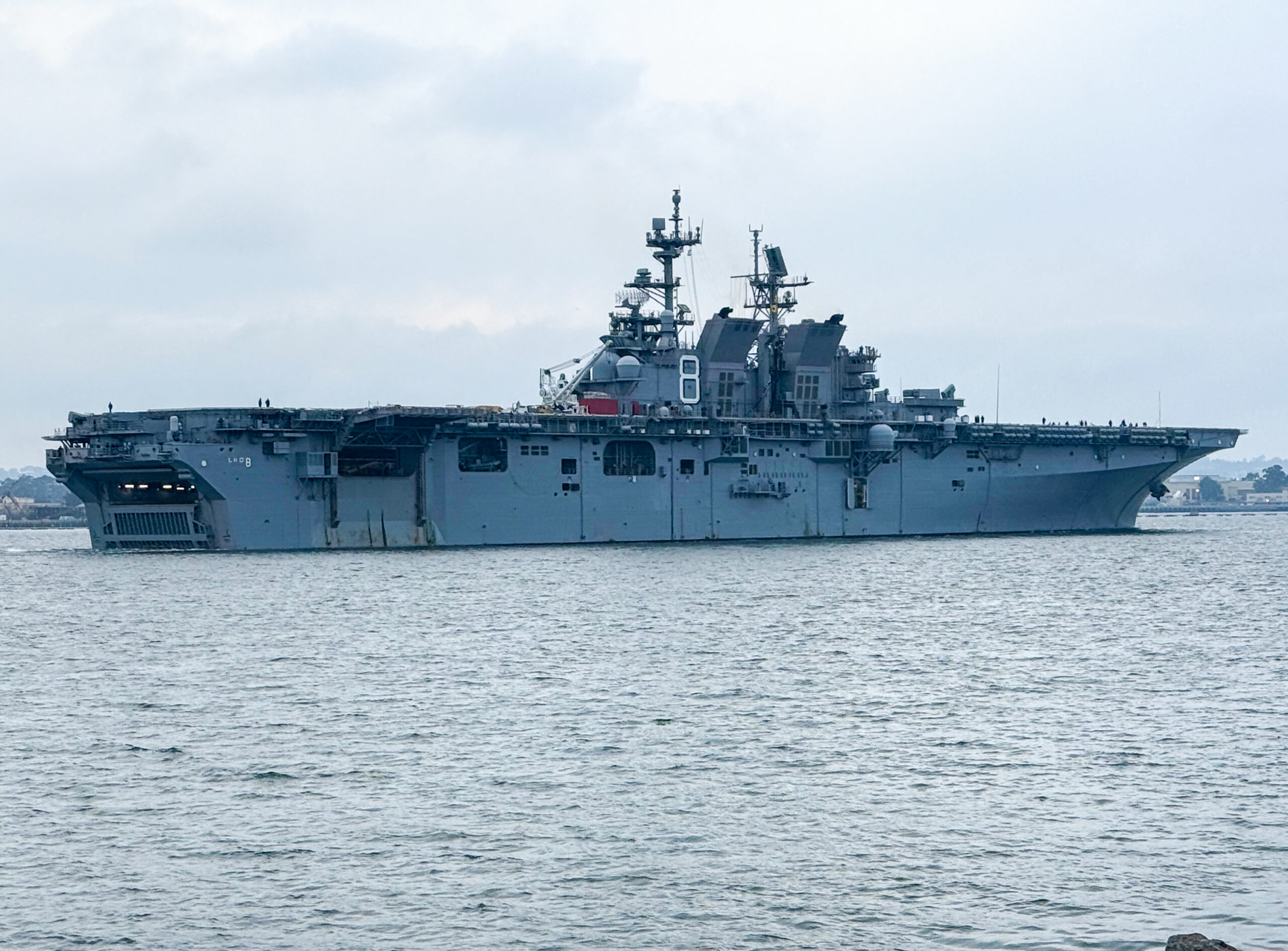
The 3.4-mile street course wound past aircraft carriers docked between Turns 5 and 6 at what drivers called “Carrier Corner.” It threaded through the base’s tight, technical infield. It hugged the San Diego Bay shoreline with views of downtown’s skyline as a backdrop. Fans watched from grandstands positioned strategically along the temporary circuit, and service members in dress uniforms walked the paddock alongside some of the sport’s biggest names.
General admission tickets for Saturday and Sunday had sold out immediately. The event drew celebrities — Travis Kelce was spotted in the crowd, Marshawn Lynch and actor Scott Eastwood participated in pre-race ceremonies. But beyond the Hollywood names, the real electricity came from San Diego itself. This was the city’s moment. And it delivered.
The Race That Had Everything
From the opening lap, the Anduril 250 was unhinged. Shane van Gisbergen, the road-course virtuoso on pole position, dueled with Carson Hocevar for the early lead. Ryan Blaney won Stage 1. Then came the kind of wreck that defines a race’s narrative: a massive 23-car pileup on a Stage 2 restart that eliminated early favorites like van Gisbergen and promising rookie Connor Zilisch, who hit the concrete barrier with sickening force.
The carnage cleared the field and opened opportunity. Ryan Preece won Stage 2. Then came the final 35 laps — the stretch that would crystallize this day in San Diego as something historic.
Tyler Reddick, the series points leader and one of NASCAR’s most accomplished road-course drivers, seized control of the race in the final stage. His No. 11 Toyota was sharp, his composure unshakable. With fewer than five laps remaining, Reddick was cruising toward victory. His crew was already planning the celebration. Reddick looked like he had the race won, preparing to notch his sixth victory of the 2026 season.
Then Corey Heim, starting 13th and running second, saw his moment.
The Cinderella Story
Heim’s path to this point was supposed to take longer. Much longer. The reigning NASCAR Craftsman Truck Series champion was in a part-time Cup Series ride — 23XI Racing’s developmental program — alongside full-time stars like Reddick. Expectations were tempered. Heim was supposed to develop over years, gradually earning full-time status after 60, 80, 100 races.
Instead, in his 13th start, Heim was chasing down one of the sport’s elite on one of the sport’s biggest stages.
“I was able to stick with him,” Heim recalled after the race. “I’m not really burning my stuff up. Five laps to go came. Time to put some pressure on him, see if I could get him to make a mistake. Sure enough, he did.”
With three laps remaining, Heim made his move. Into Turn 2 on the 3.4-mile circuit, Reddick’s tire slipped. For just an instant, the door was open.
Heim dived to the inside. He and Reddick ran side-by-side through Turns 3 and 4, separated by mere inches, the crowd erupting with every twist of the wheel. Into Turn 5 — the tightest corner on the circuit — Reddick tried a desperation crossover move.
The two cars made contact. Reddick’s No. 11 scraped the outside wall. For a heartbeat, it seemed like the aggressive defensive move might work. Instead, Reddick backed off — a moment of sportsmanship that, in the blink of an eye, cost him the race and his teammate everything to gain.
Two laps later, traveling at speed toward Turn 9, Reddick felt the sickening vibration and loss of grip. A flat left-front tire. His car immediately became a rolling passenger vehicle, and Heim pulled away to the checkered flag, winning by 10.365 seconds.
Reddick limped to the finish in 25th place. His six-victory season continued on. But the points leader’s lead over Denny Hamlin evaporated from a comfortable 129 points to just eight in a devastating instant.
Meanwhile, Heim was speechless.
“I’m speechless,” he said, his voice still shaking in post-race interviews. “I mean, we started the race 13th. We fell straight back to 20th. Then we put on our scuffs from qualifying and struggled just as bad. I don’t know if we made any adjustments. (Crew chief) Bootie (Barker) kept telling me these were our worst two sets of tires, we were going to be fine. He was right. I couldn’t believe it.”
He paused, the reality still settling.
“I didn’t expect to come in and win. It hasn’t even sunk in yet. I hope I don’t wake up from this dream.”
Bubba Wallace, also driving for 23XI Racing, finished second. Kyle Larson ran third. But the story belonged to Heim. A Toyota sweep of the top two positions. The victory gave Toyota its fourth consecutive Cup Series victory — its longest streak since 2017 — and marked the first Cup win ever for the No. 67 in series history.
San Diego’s Championship Moment
Beyond the racing, the event itself was a triumph for San Diego. The city had pulled off what many thought impossible: hosting a world-class NASCAR event on an active military base without compromising security or military operations.
The three-day weekend saw thousands of fans navigate onto the base through multiple entry points. The Navy’s 250th anniversary celebration added a patriotic undercurrent that went beyond typical motorsports pageantry. Service members participated in driver introductions. The base’s own infrastructure — the aircraft carriers, the hangars, the runways — became part of the track’s dramatic landscape.
Traffic was managed through coordination with Caltrans, the California Highway Patrol, the San Diego County Sheriff’s Office, Coronado police, and the Navy. Public transportation was utilized. Attendance was capped at 125,000 admissions across the three days, with Friday reserved for Navy personnel and local residents, and Saturday-Sunday for the general public. It worked.
“The event has created a lot of excitement around Coronado,” acknowledged longtime resident Ken Fitzgerald. Alongside the excitement came legitimate concerns about traffic and community impact. But as the weekend concluded, the consensus was clear: San Diego had delivered something special.
Sports San Diego, the nonprofit behind recruiting the event, noted that Saturday and Sunday general admission tickets had completely sold out. Only premium hospitality packages remained available. The economic impact was substantial — the organization has generated over $1 billion in economic benefit for the San Diego region since 1978 through similar marquee events.
A Historic Moment in Three Parts
The NASCAR San Diego Weekend spanned three days, three series, and three milestones:
Friday, June 19 — The Navy CRAFTSMAN Truck Series race kicked off Navy Community Day, with exclusive attendance for naval personnel and Coronado residents. Layne Riggs won in overtime.
Saturday, June 20 — The NASCAR O’Reilly Auto Parts Series took center stage as the sun began setting over San Diego Bay. Austin Hill won for Richard Childress Racing, the team’s first victory after the death of Kyle Busch earlier this year. It was a triumph tinged with emotion and remembrance.
Sunday, June 21 — Corey Heim’s fairy tale. The Cup Series event that will be remembered as the day NASCAR proved it could hold a showcase race on a military base, the day a 23-year-old made his breakthrough on one of the sport’s biggest stages, and the day San Diego announced itself as a premier motorsports destination.
Looking Ahead
NASCAR officials were already discussing a return to Naval Base Coronado. The success of the inaugural event, combined with the dramatic finish and the city’s enthusiastic reception, made the case for bringing the event back to San Diego a no-brainer.
Heim, meanwhile, was announced months earlier as a full-time Cup Series driver for 23XI Racing starting in 2027. His first win — his 13th start — in the middle of his part-time 2026 season, erased any doubts about his readiness for full-time competition.
“I was able to stick with him. I’m not really burning my stuff up,” Heim said, recounting his final chase of Reddick. That patience, that maturity, that control under pressure on one of NASCAR’s most technically demanding courses in front of nearly 50,000 fans in San Diego — that’s exactly the kind of performance that launches careers.
Standing in Victory Lane with his crew, doing burnouts across the Coronado tarmac with aircraft hangars and the San Diego skyline as his backdrop, Corey Heim had arrived. Not in some distant future, not after 100 more races of development. Right there, on Sunday, June 21, 2026, at Naval Base Coronado, the future had announced itself.
And San Diego had hosted the moment it will never forget.
Final Race Results:
- Corey Heim (No. 67 23XI Racing Toyota)
- Bubba Wallace (No. 23 23XI Racing Toyota)
- Kyle Larson (No. 5 Hendrick Motorsports Chevrolet)
- Zane Smith (No. 38 Front Row Motorsports Ford)
- AJ Allmendinger (No. 16 Kaulig Racing Chevrolet)
Race Details:
Distance: 75 laps | 255 miles
Average Speed: 70.561 mph
Time of Race: 3 hrs, 36 mins, 50 secs
Margin of Victory: 10.365 seconds
Lead Changes: 20 among 13 drivers
Caution Flags: 7 for 11 laps
Related Posts